
Reach Out and Read is a national, evidence-based program embedded in pediatric primary care, which strengthens families with young children through guidance from medical clinicians about shared reading that supports healthy child development. We envision a world where every child has the nurturing relationships and resources to learn and thrive.
Reach Out and Read Florida is a statewide early literacy program that has integrated books and early literacy guidance into pediatric primary care for more than two decades. Through 284 medical sites across 40 counties, our trained providers reach more than 336,000 children annually.
 The Family Learning Partnership serves as an independent affiliate, operating Reach Out and Read Florida. We manage program implementation, provider training and support, and statewide compliance. We partner with both the Florida Division of Early Learning and the Florida Department of Health ensuring the program aligns to Florida’s Early Learning Developmental Standards and the Florida Department of Health’s priorities. We partner with programs, organizations, and systems to advance stronger holistic supports, such as Early Steps, Help Me Grow Florida, and the New World’s Reading Initiative to extend the continuum of early learning supports for Florida families. As an independent nonprofit, The Family Learning Partnership has its own Board of Directors and Clinician Learning Collaborative, providing governance and strategic leadership to ensure the success and sustainability of Reach Out and Read programs throughout Florida.
Reach Out and Read Florida is the state’s most extensive early literacy program embedded in pediatric primary care — AAP-endorsed, clinic-based, and reaching children from birth to five with measurable impact for families and providers alike.
The Reach Out and Read intervention is unique for its unparalleled access to children through the medical home, supporting families through the trusted voice of the medical provider. We know shared reading can help develop strong parent-child bonds that last a lifetime, buffering toxic stress and building resiliency. Literacy is a critical skill, and early childhood is the critical time for equipping children for a lifetime of success.
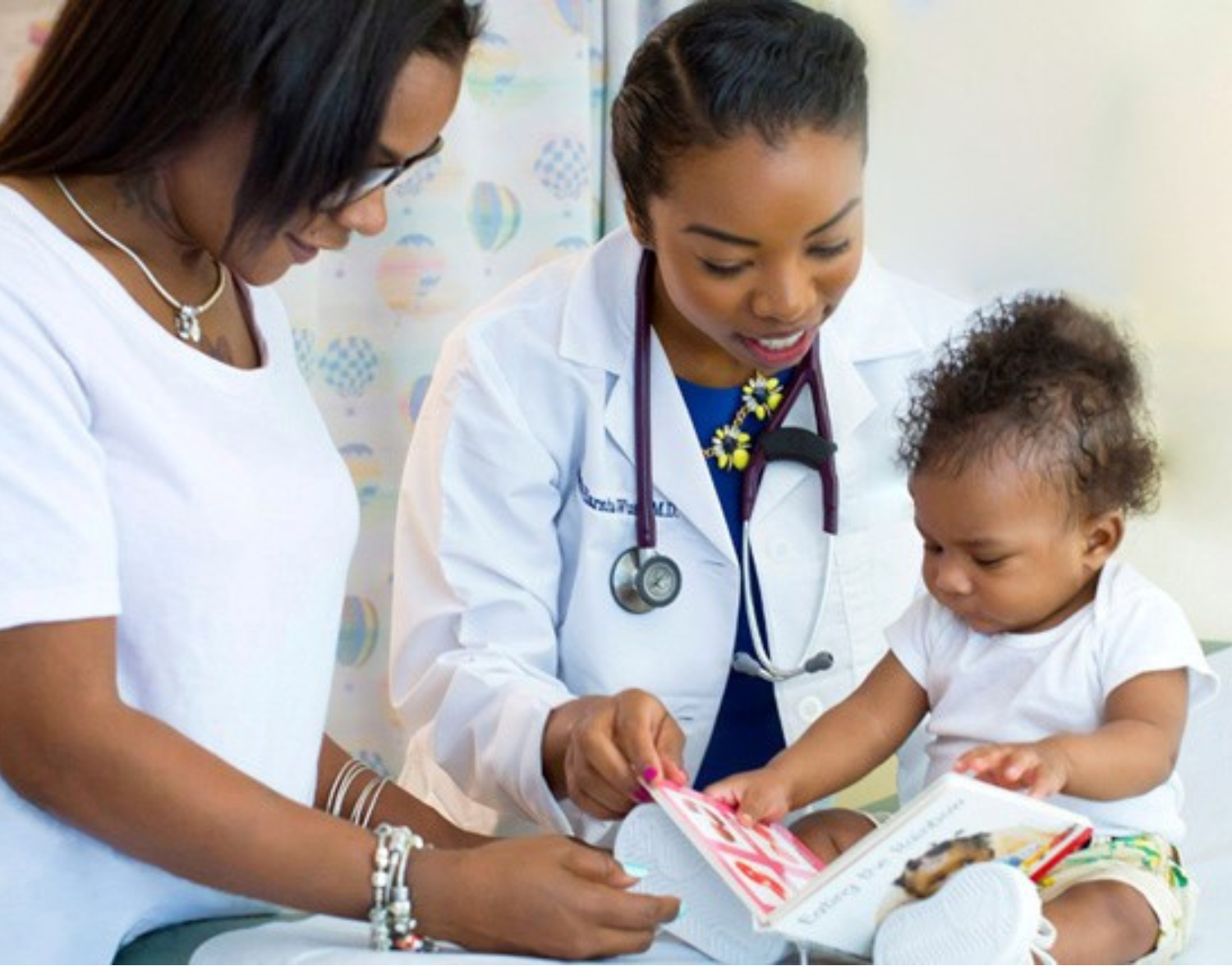
Primary care providers (Doctors, Nurse Practitioners, and Physician Assistants) are trained to deliver anticipatory guidance to parents and caregivers of children from infancy through 5 years of age during each well-child visit. This age-appropriate guidance centers on the importance of elements such as: early relational health, frequent and early exposure to language, looking at board books and naming pictures with infants, rhyme, and repetition for gaining phonemic awareness during toddlerhood, and reading interactively (such as asking open-ended questions) when reading with preschoolers. Providers also use this opportunity to model reading aloud and introduce it as another way to support positive interactions between caregiver and child.
Reach Out and Read practices are integrated into all CDC/AAP-recommended well-child visits from birth to age 5. This aligns with the American Academy of Pediatrics’ Bright Futures Periodicity schedule, which recommends 14 well-child visits during the first 5 years of life (at birth, 1 month, 2 months, 4 months, 6 months, 9 months, 12 months, 15 months, 18 months, 24 months, 30 months, 3 years, 4 years, and 5 years). The Reach Out and Read model is designed to be implemented at all 14 of these visits.
A robust and growing body of peer-reviewed research shows that children exposed to Reach Out and Read experience measurable improvements in language development, early literacy skills, and school readiness. Families participating in the program are significantly more likely to engage in shared reading behaviors, with studies demonstrating that parents are approximately 2.5 times more likely to read regularly to their children compared to control groups. Children exposed to the intervention also show higher expressive and receptive language scores, stronger vocabulary development, and improved early cognitive outcomes.
Reach Out and Read: The Evidence
In December 2024, the AAP updated its policy statement affirming literacy promotion as an essential, evidence-based component of pediatric primary care — beginning in the newborn period. The policy highlights Reach Out and Read as the only program recognized as a universal primary preventive strategy for promoting early relational health and positive childhood experiences.